
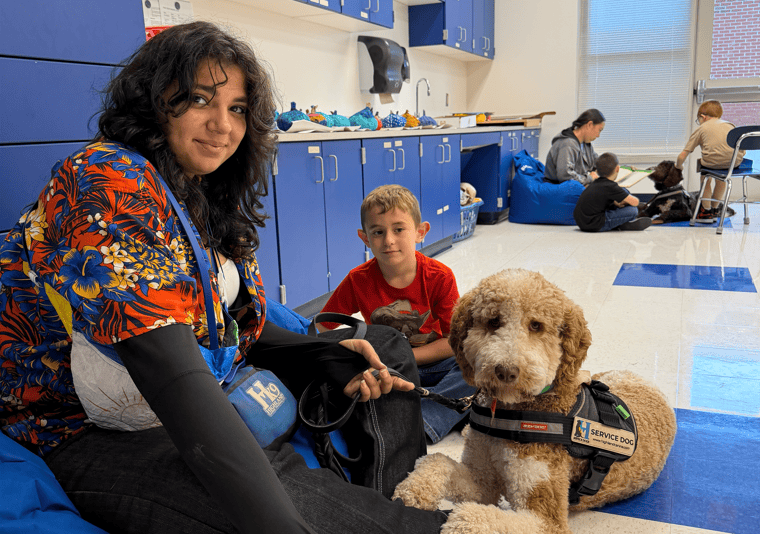
Back in June last year, we spoke with Rana Soliman – the 2025 winner of our International Scholarship award. The International Scholarship provides the recipient with the opportunity to attend our Master Dog Trainer program – an intensive 24-week program that covers all aspects of dog training.
Having finished her studies and graduated from the Master program, we caught up with Rana for a follow-up interview to learn her thoughts about her studies.
What was your favorite part of the Master Dog Trainer program?
The answer that first pops to mind is the service dog portion, but I don’t think that would be very accurate of me to say. After having been exposed to aspects in dog training I didn’t even know existed, and others that I did but didn’t think would be of huge interest to me, I found myself pleasantly surprised at how eager I was to learn about anything-and-everything-dogs that I could possibly get my hands on.
With the timing of the course and the way it’s set up, you first get to see the near-finished product in the dogs that are almost done with their training and set to deliver. With my level of inexperience, I hadn’t fully comprehended the level of insanely-detailed planning and dynamic training needed to make that end-result possible.
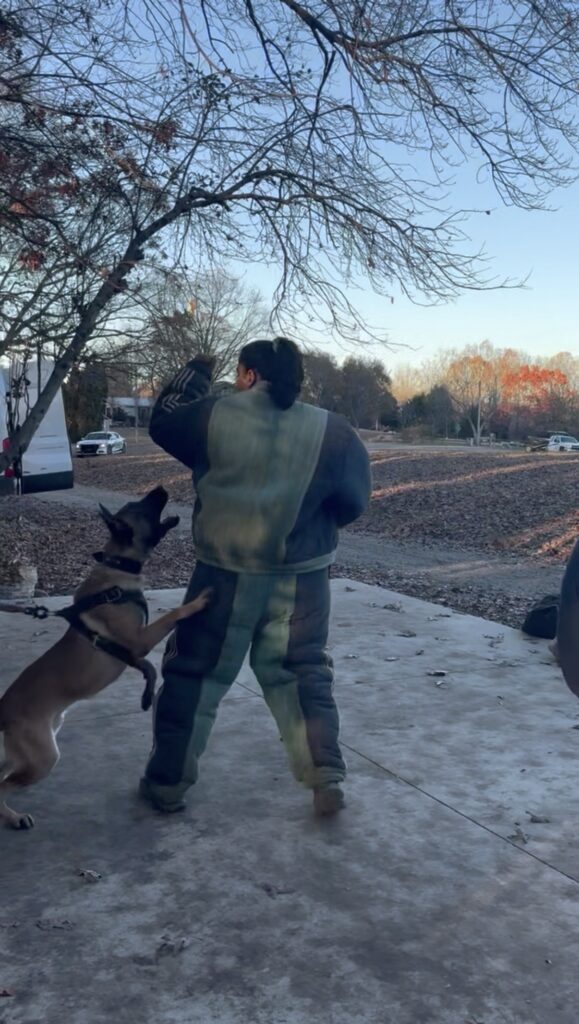
Enter the next batch of green dogs and puppies, and my mind was sufficiently blown. I just couldn’t wrap my head around it; in what world can you turn that pack of raw, barely contained potential that just landed off a 12+ hour flight from across the world into the perfectly civil yet deadly police K9s I’d just seen go off with their new handlers? Or a pack of wild, unruly puppies into the incredibly focused and fiercely reliable service partners that will go on to change a family’s life?
And then you see it all. The planning. The meticulousness. The controlled chaos. Before you know it, you start to see those wild animals begin to shape into shadows of the ones you just saw getting delivered, and you understand how that almost perfect image you’d witnessed can be replicated in just a few months. And the sheer amount of hard work needed to achieve that.
So, to answer your question, my favorite part was getting to see that process in exactly this progression. Service dogs, police K9s, detection, cadaver, search and rescue. All of it.
Did the course live up to your expectations?
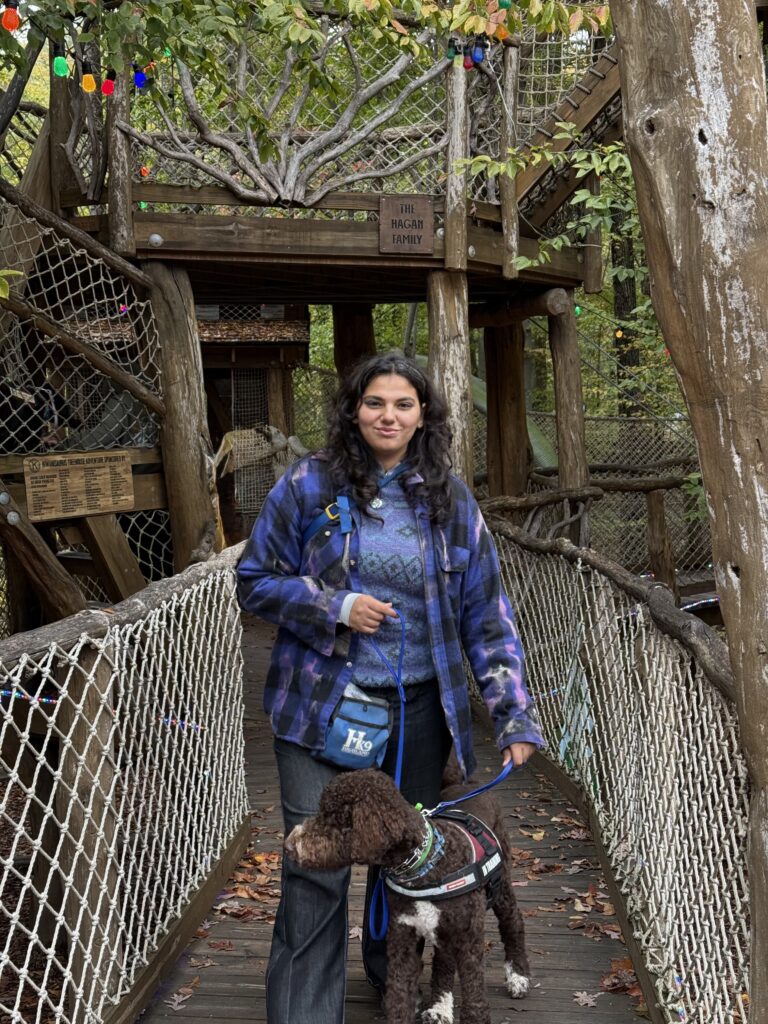
After having lived and breathed nothing but dog training for the past six months, I can say with certainty that the entire experience was incomparable to anything I could have imagined. In the most positive way possible. Getting to wake up every day and work dogs or learn about dogs for 8 hours, then go home with the service dog I’m puppy raising and do even more training. Having unlimited access to acres and acres of wilderness and professional equipment. You’re basically learning 24/7, and the only limit when it comes to the amount of knowledge you can walk away with from this course is yourself.
I was also very pleasantly surprised by the methods that Highland adopts in their training. Now that I possess a certain level of foundational knowledge, I’ve been researching the industry with a completely different perspective and a much more educated eye. Their training methods are completely disruptive and vastly ahead of the curve, and their accuracy rate speaks for itself in terms of their methods’ effectiveness. I’d say the only downside to training as a student at Highland is the disappointment you face when you leave the school and go out into the real world only to realize that the industry standard is 20+ years behind in comparison.
What are the main differences you noticed between the dogs you encountered in the US, and dogs in Egypt?
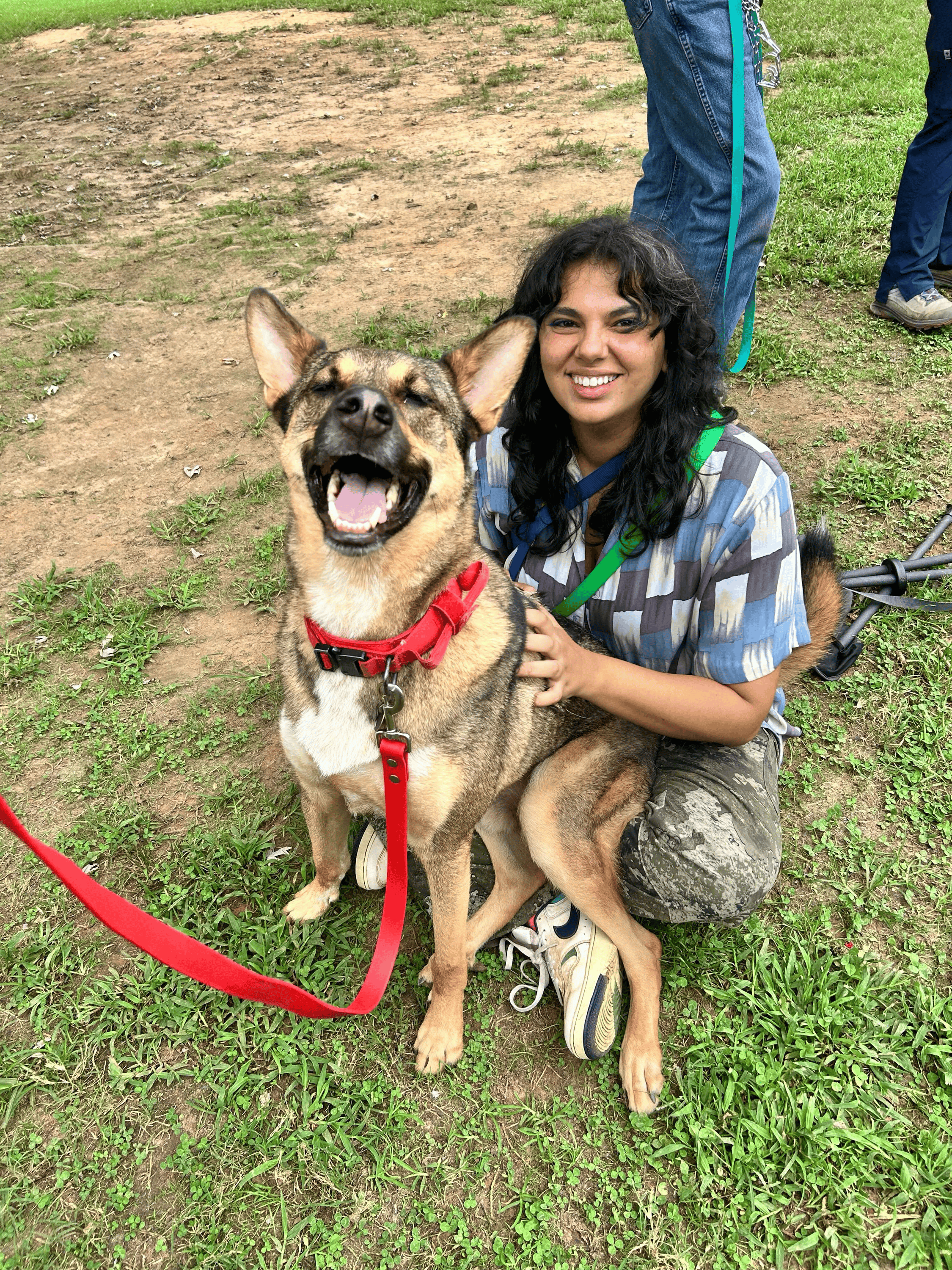
If we’re talking Baladi dogs (Egyptian street dogs), I’d say the main difference is in getting to observe their behavior in the more traditional, pack-like hierarchy that you learn about in animal psychology rather than the more contained setting you usually see dogs in in the US (or any other country that doesn’t have many free-roaming dogs on the street).
In such a setting, you get to learn more about how dogs survive and communicate with each other without human interference. You see the mama correcting her pups. You see the alpha overpowering one of the disorderly members of the pack with little more than a look. You see the older members go out and scavenge the streets for food, dodging cars left and right with the kind of grace that can only be achieved by generations spent skirting along the very thin line between life and death.
And then you take one of those dogs aside, to a calmer setting where they can relax ever so slightly, where their survival instinct does not have to be constantly working overdrive, and you find an incredibly intelligent, soulful, resilient animal that possesses the incomprehensible ability to forgive the years of torture we’ve caused them. It’s a feeling that I cannot quite describe, all I can say is that it’s what fuels me down this path to change their egregiously inaccurate perception in society.
Have there been any differences you noticed in attitudes towards dogs in the US, compared with Egypt?
While there are significant differences, many of which I went into during my previous interview with the school, I’d say what surprised me more was the similarities between dog owners here in Egypt and dog owners in the US that I had not expected existed to this degree. And not the good kind.
One of the things that broadened my perspective the most at Highland was the shelter volunteer program they ran, where students can volunteer at a local shelter once a week to work with dogs to increase their chances of getting adopted.
Prior to embarking on this experience, I had not expected that I would be witnessing the level of unawareness I did when it came to some of the dog owners I encountered. I saw the same things there that I do here that make my blood boil and my heart ache.
You see the owners who will buy a backyard-bred dog based solely on looks, having done absolutely zero research into whether or not the lifestyle that that dog breed demands fits into theirs, or whether that dog’s health conditions will even allow them a lifespan past 7 years. You see the owners that will buy their kids a puppy for Christmas, only to realize how big of a responsibility that dog is and dump them come New Year’s. You see the owners who refuse to socialize, exercise, or train their dogs, then blame the animal when behavioral issues inevitably bubble to the surface. Actually, you don’t see the owners. You only see the deathly emaciated, morbidly obese, severely matted, or dangerously reactive dogs they dumped at the shelter because they couldn’t justify “caring” for them anymore.
So, even though awareness and education are definitely significantly less here in Egypt, I believe that there’s lots of room for improvement on both ends, and that we as dog owners must bear the responsibility to understand the magnitude of what we’re getting ourselves into prior to purchasing a puppy on a whim solely because they look cute.
When we spoke to you last year, you mentioned that you wanted to start Egypt's first service dog training program. Is that still your plan, or has your time at the School changed your ideas?
Yes, and yes. While establishing Egypt’s first ever service dog training program is still my plan, Highland has definitely challenged a lot of my ideas and dismantled many of the pre-conceived misconceptions I had going into this course. I looked back at the interview I did six months ago, and was surprised at how naive many of my answers were knowing what I know now.
I now understand that the use of certain breeds in service work is not superficial. I understand the importance of investing in said breeds and ensuring that they come from an ethical breeder who prioritizes genetic health above appearances. I understand that the concept of purely positive training is practically impossible. I understand the value of having training tools in your back pocket, and knowing when and how to use them responsibly.
Coming back home, I was also pleasantly surprised to find that the talk about dogs and Baladi welfare in Egypt has picked up significantly during my absence. 2026 kicked off the first-of-its-kind official government-led campaign to manage the ever-growing stray dog population in Egypt through organized, humane methods. For the first time, Egypt will finally be adopting the CNVR model in an effort to address the overpopulation, while still maintaining proper ecological balance. In comparison with the ad-hoc, fragmented methods used in the past, this initiative is huge, and serves to reaffirm that change is happening, and that this is exactly the right time for me to be embarking on the journey to break down societal perceptions and challenge the status quo.
What would you say to anyone thinking about applying for the International Scholarship?
Do it. Apply once, twice, ten times if you have to. I can promise you that any disappointment you may face at not being accepted is not even close to the knowledge you will be missing out on by not attending this program. This is a once-in-a-lifetime opportunity to attend a one-of-a-kind program, and I’m incredibly grateful to have gotten the chance to experience it.
Please feel free to include anything else you want to share about your experience at the School for Dog Trainers.
I don’t think I can fully explain just how comprehensive this course is, and just how much they teach you in what is essentially an insignificant amount of time in the grand scheme of things. Time does not make sense in the world of Highland, it’s like condensing a century of information into the blink of an eye; it feels both impossibly endless and painfully fleeting at the same time.
Whether you have 20 years of experience or none at all, if you are someone who loves dogs and wants to learn more about dog training, I can tell you with certainty that you will not find a place that rivals the brilliance and innovativeness of Highland’s School for Dog Trainers.