
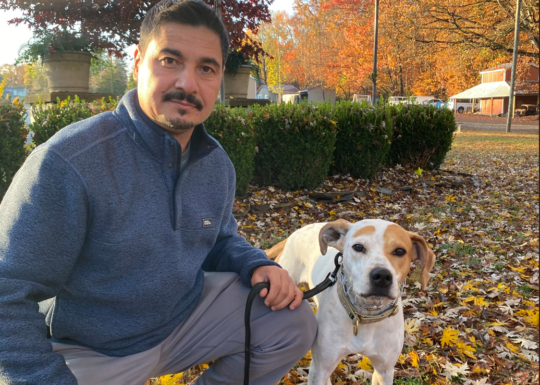
With Thanksgiving just around the corner, Class 100 at the School for Dog Trainers is approaching their final few weeks in the Master Dog Trainer program. This intensive 24-week course teaches students about all aspects of dog training, from behavioral theory to police dogs, service dogs, and more. Students engage in a mix of classroom work and hands-on training with a wide variety of dogs.
A big part of our student culture at the School for Dog Trainers is the diverse range of international students who attend our programs. One international student in Class 100 is Mohammadullah Ishan. Originally from Afghanistan, Ishan has a fascinating story to tell about his journey in the dog training world – so we sat down with him for a very interesting and unique Q&A. Read below for the interview – but first, be sure to check out this video, that Ishan himself directed and produced about his time here at the School for Dog Trainers.
Tell us a little about what sparked your interest in working with dogs, and how much experience you had before joining the program. What made you choose the School for Dog Trainers?
My name is Mohammadullah Ishan, and I am originally from Afghanistan. I have around 20 years of professional experience in the dog training industry, but my love for dogs began long before I became a professional trainer.
Some of my earliest and most meaningful memories of dogs go back to my childhood in Afghanistan in the 1990s, when my family lived peacefully in our country. My father was a very kind man who loved animals, especially dogs. At that time, we had many stray dogs living in our neighborhood. My mother would always prepare extra food for them, no matter what we were eating that day. If she cooked vegetables, she would put some bones in the cooker to make soup, break some bread into pieces, and leave the food outside for the dogs.
More than 15 dogs would often sleep in front of our door on the street. They seemed to protect our home, and none of them ever tried to harm our family.
Two dogs, in particular, have stayed in my memory. One was a female street dog named Sheroo, a name that means something like “lioness.” Many of the stray dogs in our neighborhood were her puppies. She was very protective of our family, and my father affectionately called her his daughter.
The other was a small, white dog named Moti. In an Indian language, Moti means “pearl.” At that time, there was an Indian movie featuring a dog that played an important role in the story. We were inspired by that movie, and that is how we chose the name Moti for our white dog.
According to my father, Moti had been left behind when Russian tanks were leaving Afghanistan. My father picked him up in his arms and brought him home. Moti was fortunate enough to live inside our house.
After a couple of days, we discovered something amazing: Moti was already house-trained. We used a traditional floor-level toilet in our home, and he would go there to relieve himself. As a child, I found this fascinating.
Every day, when I went to school, Moti would wait for me and watch from the window. As soon as he saw me coming, he would run to meet me and accompany me home. He became famous in our neighborhood, and everyone seemed to have a story about him. One day, Moti disappeared. We searched for him, but never found him. I was heartbroken and cried for many days.
Unfortunately, our peaceful life did not last. One day, a rocket struck a nearby army base, and people began to fear that the situation would get worse. Sadly, they were right. My family eventually decided to leave Afghanistan and seek safety in neighboring Pakistan.
Leaving was nothing like traveling today. There were no easy arrangements or comfortable flights for us. We climbed into the backs of trucks and traveled for days along rough roads. Sometimes, we had to sleep in the mountains and wait for the fighting along the route to slow down before continuing our journey.
Before leaving, we locked our house and gave the keys to a neighbor. Once again, I was heartbroken because I had to leave Sheroo behind. I cried and insist a lot to take Sheroo with us. Somehow my mom convinced me that Sheroo would be okay and our neighbour would take care of her until we return back. At that moment, our priority was to save our family. We could not take our dogs with us, and that remains one of the saddest memories of my childhood.
A few months later, our neighbor also fled Afghanistan and joined us in Pakistan. I was relieved to see them and immediately asked about Sheroo. They told us that a rocket had hit our home, but Sheroo was still sleeping in front of our door, protecting the house. She never left our door no matter what.
I have never forgotten that story. Even now, when I think about Sheroo, it brings tears to my eyes. I was also told that, during the conflict, hungry dogs sometimes searched for food in those areas where people had been killed . It was heartbreaking to imagine what those animals had to endure.
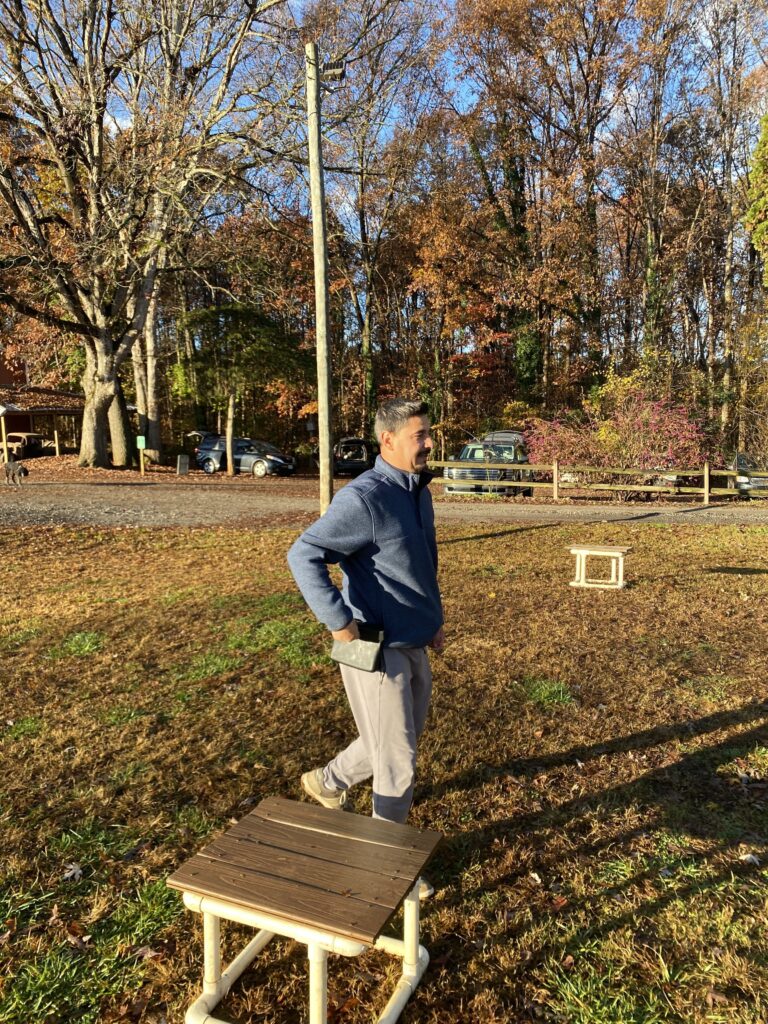
My family spent around 14 years in Pakistan. God knows for how many months or years Sheroo waited for us but I am sure she protected our home and waited for us until her last breath. During that time in Pakistan, we had another dog, a male German Shepherd whom I also named Moti. He stayed with us until he grew old and passed away. He was also very protective and would not allow anyone to get into our home (actually that was one of the reasons we used to have dogs).
After the events of September 11, 2001 in New York, and the changes that followed in Afghanistan (establishing a new government) my family decided to return to our country around 2004. I joined the Afghan Army and later became a special agent with the President Protective Service (PPS). In 2005, I joined its K-9 unit and earned my first explosive detection dog handler certification.
That was the beginning of my professional career with dogs, a career that has now spanned around two decades.
As for choosing the School for Dog Trainers at Highland Canine Training, I was looking for a program that covered many different areas of dog training rather than focusing on just one specialty. I had followed Jason [Purgason], the school’s owner, on social media and was particularly interested in his approach to detection dog training. The more I watched interviews of him and researched the school, the more I wanted to learn about his training system and find answers to questions I had developed throughout my career.
After moving to the United States as a permanent resident through the Special Immigrant Visa program, which recognizes certain individuals who supported U.S. missions abroad, I decided that this was the right opportunity to continue my education. I wanted to learn from experienced professionals, strengthen my understanding of the science behind dog training, and continue growing in a field that has been part of my life since childhood.
Before arriving, what were you most excited about, and what were you most nervous about?
I was most excited about meeting Jason in person and learning his approach to detection dog training. I had followed him in social media for some time, so the opportunity to learn directly from him was something I genuinely looked forward to.
To be honest, I was not particularly nervous about anything. I believe my 20 years of experience in the dog training industry gave me the confidence to approach this new chapter with an open mind. I knew I still had a lot to learn, and I was excited to be a student again.
How has the experience compared with your expectations?
It has been a wonderful experience, and I would say it has exceeded my expectations.
As I mentioned, I wanted to train and learn about Jason detection dog training systems, Although I understood that a certificate was not necessarily required to establish my own business in U.S., I thought that earning one would strengthen my qualifications and help me find better employment opportunities.
Once I joined the program, I realized that it was about much more than earning another certificate. I began learning about the science behind many of the things I had been doing in dog training for nearly two decades. The program has helped me look at familiar techniques from a different perspective and better understand why they work.
I am very happy with my decision because I have gained knowledge that goes beyond what I initially expected. It has reminded me that no matter how much experience we have, there is always more to learn.
What has been your most memorable hands-on experience so far?
That is a difficult question because I have had so many memorable experiences throughout the program.
However, learning the school’s approach to detection dog training has been especially satisfying maybe because I came into the program with many questions about detection work, and having the opportunity to explore those questions in a structured learning environment has been very valuable to me.
Learning about service dogs has also been exciting. Even after many years in this profession, discovering new information and developing a deeper understanding of different areas of dog training keeps me motivated. For me, one of the best parts of this experience has been realizing that there is still so much to discover.
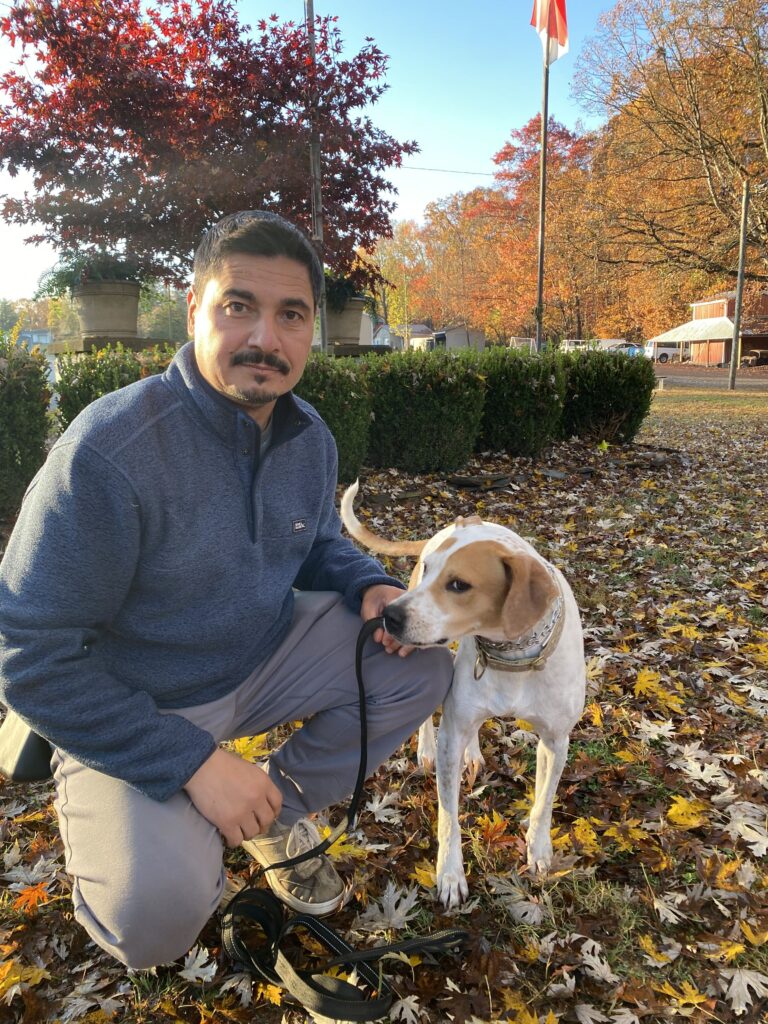
Have you noticed any differences between how people approach dog training here and in your home country?
In Afghanistan, dog ownership and care were very different from what I see today in the United States. Even commercial dog food was something people in my community did not know about. Dogs were often cared for with whatever food families could share with them. We only used dog food when I got professional training in the K-9 unit.
I also spent nearly 13 years in Turkey, where I worked in different dog training schools. Based on my personal experience, some of the training environments I encountered relied heavily on rough, aversive methods. In some cases, people entered the industry without proper education or a strong understanding of dog behavior. I saw situations where individuals with very little training experience were given opportunities to become trainers simply because they had found work at a dog training facility.
Of course, I do not believe this describes every trainer or school in Turkey. I have also seen improvements, and I hope the industry continues to develop through better education, more responsible practices, and a stronger understanding of canine behavior.
One of the things I appreciate about Highland Canine Training is its emphasis on fairness and responsibility. Training tools and methods should be selected and used with the dog’s welfare in mind, with proper knowledge, safety, and accountability. I value the opportunity to learn not only how to train a dog, but also how to understand the reasoning behind a training decision.
My experience here has reinforced my belief that continued education is important for anyone who wants to become a better trainer and provide better outcomes for dogs and their owners.
What has it been like learning alongside students from different countries and backgrounds?
It has been a wonderful experience. Having classmates from different countries gives us the opportunity to learn about one another’s cultures, share our experiences, and sometimes even learn a few words in each other’s languages. I would say national or international, everyone is so much kind and cooperative.
Everyone brings a different background and perspective to the classroom, which makes the learning experience more interesting. There is also a friendly sense of competition among students, which encourages us to stay focused, work harder, and keep improving.
Overall, I have really enjoyed building friendships with Americans and people from different parts of the world. It is a reminder that, although we may come from different countries and speak different languages, we share a common interest in learning about dogs and becoming better trainers.
How do you hope to use your training after completing the program?
As someone who is relatively new to the United States, my plans may look a little different from those of other students. I am still learning about the industry and laws, understanding the opportunities available, and deciding on the best path forward.
My first goal is to find a good position at a professional dog training facility where I can train dogs, gain experience in the American dog training industry, and contribute what I have learned throughout my career.
In the longer term, I would like to establish my own dog training business. However, I understand that building a successful business takes time, planning, experience, and financial stability. I do not expect everything to happen immediately after graduation.
For now, I am focused on successfully completing the program, applying my knowledge, and taking the right steps toward a successful future in dog training.
What would you tell another international student considering the program?
I would encourage them to take their education seriously and make the most of the opportunity. If we want to serve our communities and our countries better and be fair with dogs, we need to keep learning, improving our skills, and expanding our knowledge.
Experience is valuable, but experience alone should not stop us from asking questions or learning new things. I came to this program with around 20 years of experience, and I have still discovered many things that have changed the way I understand dog training.
If you are an international student who wants to develop your skills, learn more about the science behind training, and become a more knowledgeable and responsible dog trainer, I would encourage you to consider Highland Canine, School for Dog Trainers.
My advice is simple: come ready to learn, ask questions, listen to different perspectives, and take your education seriously. You may discover that the experience gives you much more than the certificate you originally came for.