
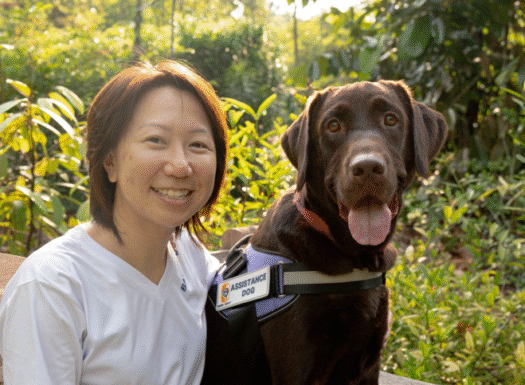
You may have seen our recent blog article where we interviewed Kate Tan – the latest winner of our International Scholarship, which grants the recipient the opportunity to attend our 24-week Master Dog Trainer program at our Main Campus in North Carolina.
Kate is from Singapore, and she follows in the footsteps of a previous International Scholarship recipient from the same country – Christine Ho. Christine attended the Master Dog Trainer program in 2021, and upon returning to Singapore, has made great strides with her business, Bark of Duty.
In this interview – five years on from attending the School for Dog Trainers – we spoke with Christine about her business; how her studies at the School help her in the day-to-day running of her business; and her future aspirations for herself and Bark of Duty.
You can learn more about Bark of Duty at https://www.barkofduty.com/.
Christine, please tell us a little about your business and the services it provides.
Bark of Duty is a Singapore-based social enterprise dedicated to advancing the standards of specialised canine work across Southeast Asia. Our core services follow a dual-track model:
- Assistance Dogs: We train highly reliable assistance dogs—specifically for autism, mobility, seizure alert, hearing, and psychiatric support—customised to navigate Singapore’s unique, dense urban environment. Since the assistance dog industry beyond guide dogs is virtually non-existent here, we are breaking new ground—navigating a landscape where public access is restricted to prove that these dogs are a massive, untapped resource for the region.
- Companion Dogs: We offer premium training services for pet dogs, applying balanced working dog principles to help everyday owners build stable companions. Revenue from this track funds and subsidises our assistance dog program, ensuring our social mission remains financially sustainable.
Beyond our primary services, we are also exploring the potential of using detection dogs to support local environmental and conservation efforts. Ultimately, our mission is to advocate for the transformative power of working dogs, demonstrating the profound impact they can have on the lives of individuals, ecosystems, and communities.
Could you tell me a little bit about your experience with your dogs before attending the School for Dog Trainers?
My journey began in 2002 when I adopted a large, hyperactive dog. She came with a laundry list of issues: she had chewed down a tree overnight in her previous home, wasn’t house-trained, was terrified of car and elevators, and would refuse to walk to the point where she had to be carried home. I now understand she was simply a working-line dog that had not been socialised well as a puppy. While I managed to work through most of her quirks on my own, I struggled with loose-leash walking. We joined a group obedience class where we started as the worst in the group, but through sheer hard work, we became one of the few teams to pass.
That experience got me hooked, and I spent the next several years finding ways to dabble in training. From 2004 to 2008, I worked with a local dog training school on obedience and behavior modification. I also gained experience training dogs and birds for print media, and handled challenging dogs for traveling owners. Later, in 2016, I adopted a street dog from Brazil with fear and aggression issues. By the time I attended the School for Dog Trainers, I had years of hands-on experience learning from my own dogs and helping others wherever I could.
How did you first hear about the School for Dog Trainers?
In my search to learn more about training assistance dogs, I reached out to over 50 organizations worldwide that were members of Assistance Dogs International (ADI). One of the US-based organisations directed me to the School for Dog Trainers at Highland Canine, recommending it as a programme that would provide the foundation and hands-on experience needed to become a qualified assistance dog trainer.
Can you provide some insight into how your education at the School for Dog Trainers helps you in your day-to-day activities?
Before attending the School for Dog Trainers, my approach relied mostly on natural intuition, and trial and error. The education at the School gave me the scientific foundation I was missing, providing me with a deep understanding of learning theory and canine ethology, which directly impacts how I approach a dog’s development and structure my training programs.
Crucially, the School for Dog Trainers gave me the opportunity to work hands-on with a vast array of dogs, spanning different temperaments, behavioral issues, breeds, and lines. This immersive experience taught me to objectively understand the pros and cons of different training tools and techniques. Because no two dogs are the same, I can now confidently draw from a wide variety of styles to perfectly match each individual dog’s motivation and character, as well as their human companions.
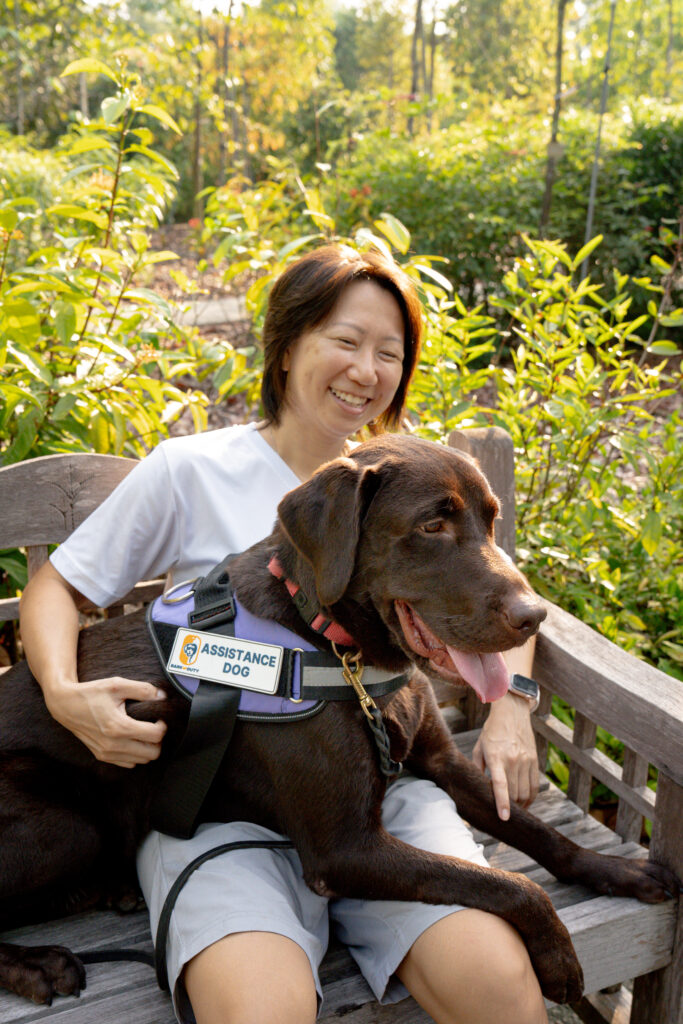
How useful was the business module of your studies at the School for Dog Trainers, and how do you apply what you learned in your business?
The business module gave me the opportunity to start fleshing out a concrete business plan. It pushed me to research and define critical fundamentals like our business structure and branding. Additionally, the bonus courses provided a great foundation in SEO, website creation, and digital marketing. Overall, what I learned has made me more deliberate in how I plan, market, and manage Bark of Duty today.
How easy (or difficult) did you find it to transition to running your own business?
Some parts were relatively straightforward. As a business management graduate who had previously handled operations for an embassy, I had a strong foundation in finance, administration, and public communication.
However, transitioning to running a small social enterprise still came with a steep learning curve. It required shifting my mindset to think like an entrepreneur — learning to evaluate business models, exploring fundraising options, and navigating local commercial regulations. More than anything, because we are pioneering a new industry in Singapore, there was no existing playbook. I had to figure out everything from scratch, from deciding our legal registration status to establishing our daily operational workflows.
What is your favorite aspect of running your own business?
My favourite aspect is the creative freedom to build something new and groundbreaking. I enjoy the variety that comes with running a small social enterprise. My time is split between the hands-on work—shaping a dog’s behavior and unlocking their potential—and the strategic side, like networking with new partners and engaging with government agencies to champion the recognition of assistance dogs. Having the autonomy to quickly implement fresh ideas, alongside the flexibility to manage my own time and carve out space for my personal and family life, makes this journey exciting and rewarding.
Today's students at the School for Dog Trainers are graduating into an industry which is experiencing significant year-on-year growth. This obviously has many positives, but it also makes it a very competitive industry to be successful in. Do you have any advice for graduates who are thinking of starting their own business in this industry?
My primary advice is to understand that being a great trainer is only half the battle; you must also learn to be a business owner. Carve out dedicated time to work on your business, such as managing finances, building your brand, and planning for growth.
Secondly, set up efficient workflows and administrative systems right from the start. A smooth back-end operation prevents unnecessary work and ensures you stay compliant with local laws.
Lastly, invest in client relationships and networking. Trust drives the word-of-mouth referrals that will help build your business, while a strong professional network opens doors for vital support and growth opportunities.
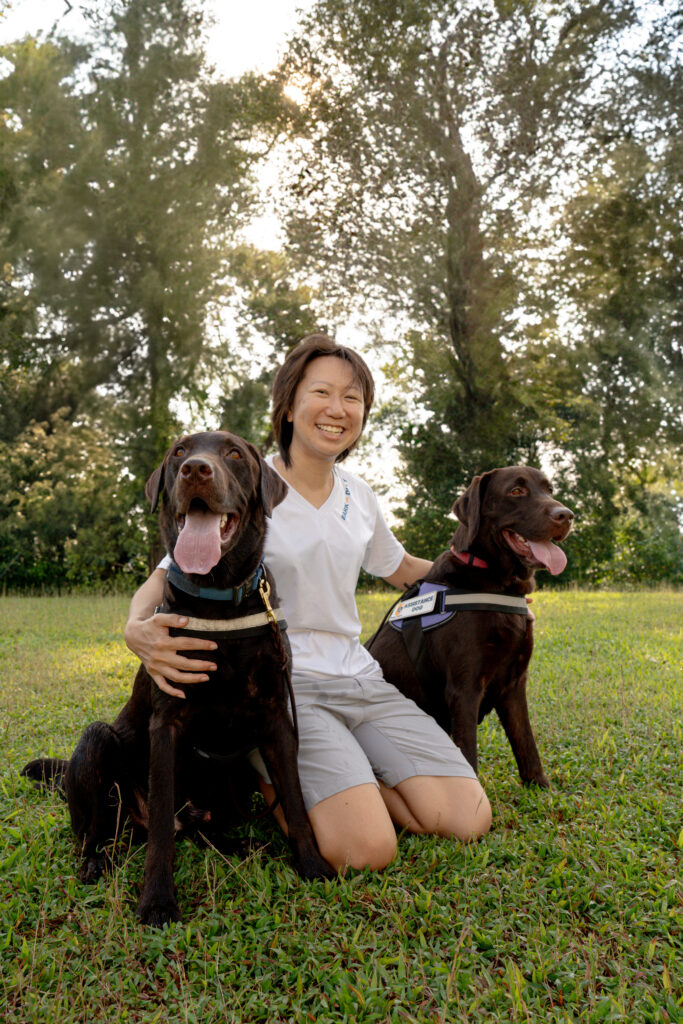
Specifically thinking about Singapore, have there been any notable changes in trends or attitudes regarding dog ownership, service dogs, or anything else related to dogs in the years since you returned after your studies and internship at Highland?
I have noticed a distinct shift in how dogs are perceived by their owners. While it is wonderful that people are increasingly treating dogs as family members, many treat them like human children, such as using strollers or dressing them up, without fully understanding or meeting their basic canine needs. Instead of prioritising foundational training, there is a tendency to look for shortcuts through novelty trends like talking buttons or animal communicators.
As for the assistance dog landscape, progress is a mix of promising conversations and slow systemic change. On one hand, institutional interest is growing. I have met with several government agencies to advocate for formal recognition. I’ve conducted community education briefings, curated activities for special needs groups, and discussed the potential of facility dogs for elderly communities. On the other hand, widespread public awareness and official legislation remain limited. While the government is reviewing the expansion of legal recognition beyond guide dogs, it is currently limited to hearing and mobility assistance dogs. I am also noticing an emerging public interest in psychiatric assistance dogs. There is still a long way to go, but the foundational conversations are slowly happening.
What are your future aspirations as a dog trainer, and for your business?
As a trainer, my aspiration is to continue building the specialised expertise required to train dogs that have a life-changing impact — particularly in unconventional roles that are currently lacking in Southeast Asia, such as assistance, facility, and conservation detection dogs. By mastering these behaviors and continuing to learn and adopt new and effective training techniques, I hope to serve as a reliable resource for families and organizations looking to integrate these incredible partners into their lives. Ultimately, this advanced understanding of canine behavior enhances how I help everyday pet owners, allowing me to use the same expertise to transform the relationships people have with their companion dogs.
For Bark of Duty, my aspiration is to build a resilient, fully functioning social enterprise that sets the gold standard for working dog excellence and regional canine training in Southeast Asia. I hope to bring in like-minded partners to scale the business, providing a comprehensive range of training for both working and companion dogs, while educating aspiring owners, handlers and trainers across the region. The physical anchor of this vision would be a world-class facility, purpose-built for the safe, efficient training of multiple disciplines, including assistance dogs, conservation detection, and dog sports. Ultimately, we will meet critical regional needs through a sustainable social model: providing life-changing dogs to those who need them, while providing meaningful employment to individuals with special needs or at-risk backgrounds.